VAX + Unix - popular at universities
- VAX ideas spread to Windows because one of the authors ended up working there
VAX/VMS
Goals:
- support different HW, various memory configs
- support constrained HW, efficient
- limited memory
- slow I/O
- support 32-bit address spaces, 4GB potential memory
- memory on machines at the time: 250KB-8MB physical memory
Address Spaces
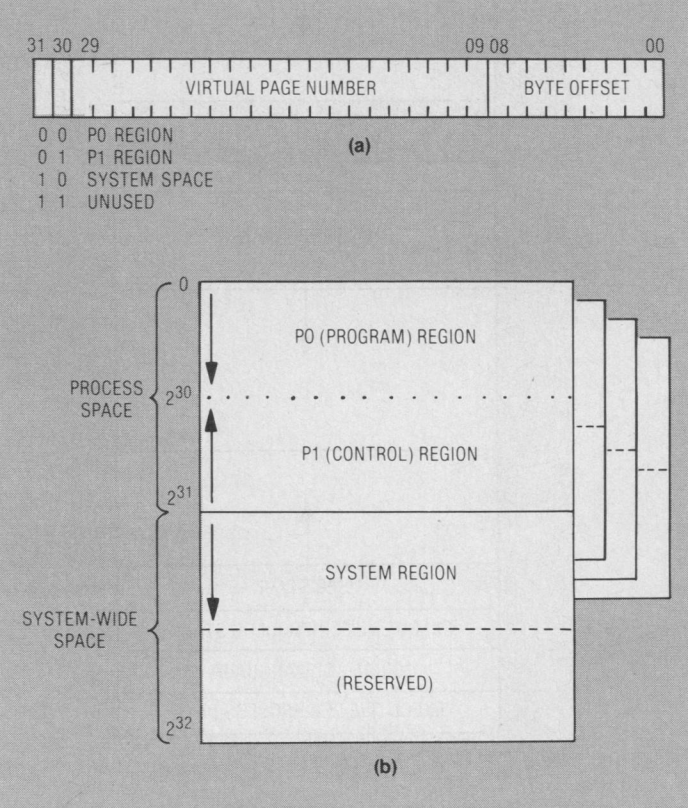 Large 32 bit addr spaces from 0 → 2^32
OS is mapped to every process because it has reserved space example: stack pointer’s virtual address starts with 01VAX ADDR
⚠ Switch to EXCALIDRAW VIEW in the MORE OPTIONS menu of this document. ⚠ You can decompress Drawing data with the command palette: ‘Decompress current Excalidraw file’. For more info check in plugin settings under ‘Saving’
Excalidraw Data
Text Elements
0
2^32
Virtual address
P0
Kernel/user
regions
P1
System
Reserved
Process Layout
VAX/VMS
Stack
heap
data
code
0
2^32
Against to grow independently of each other
UNIX
Note: derived from VAX/VMS, before no established structure
VPN
Offset
Page tables
21 bits
9 bits
protection info stored in page table
Link to original
- 0 for user space
- 1 for P1 because it’s stack space
Paging
- Fixed sized pages, 512 bytes each
- In contrast Multics had variable size pages
- mapping of virtual pages to physical pages
Page Tables
- Linear array of page table entries
- In Modern OS: it would be multi level page tables
- hardware support:
- base register → virtual address (P0, 01) physical address (system)
- length register
- segmentation faults access of region of memory outside permitted range
- context switch - update registers
- Spectre and other side channel attack : where user and system share address space
- now we separate page tables for user and system to protect from these attacks
Space Efficiency
- how to minimize space for PTEs?
- swap process page tables to storage
- what about page tables for OS?
- keep all pages in physical memory and not make them swappable
- in modern: keep a root page that is able to handle OS page swapping when needed
- TLB
- cache entries
- VAX: split it into user and kernel entries
- so user programs can’t force kernel entries out
- in modern : not the case anymore
Efficient Paging
Local page replacement
- remove pages from the same process that is trying to swap
- each process has a threshold of pages in memory
- in modern: more flexible approaches, chooses pages based on process usage or other algos
- FIFO policy - simple and they didn’t want to spend that much CPU time to decide which page to evict
- in modern: use LRU typically
Page caching
cache for pages about to be evicted:
- free list
- pages that don’t need to be written back
- if fault then you grab a page from free page to use it
- zero if for stack
- don’t have to if you read from disk, b/c it just overwrites but now leaking data which is bad
- modified page list
- pages that do need to be written back
- fault on either list brings the page back into resident set
- second chance - another opportunity to be moved back onto page table
- study found that it reduce page faults by half by using these lists
Clustering
- slow I/O, small pages → read/write are slow!
- reads - batch at a time
- write - collect many to write at once
- try to find contiguous pages to write all at once in modified page list
Summary of VAX/VMS
- process address space - inherited by UNIX and still used today
- techniques for efficient paging
Mach Virtual Memory
Mach is Micro-kernel micro-kernel → small nucleus and build everything around it MacOS inherited a bunch of virtual memory stuff
Mach VM → MacOS VM
Tevania (author) → Apple, later CTO Rashid → founded Microsoft Research
IBM RT PC
created by IBM R → RISC - reduced instruction set PC → personal computer
Systems derived from it:
- POWER RS/6000
- POWERPC
- eventually:
- XBOX
- Gamecube
Goal
- Virtual memory that is machine independent
- hardware differences:
- single processor vs multi processor
- non-uniform memory
- segmentation (Multics) vs. paging (VAX/VMS)
- TLB
- hardware differences:
- good performance
- support sparse address spaces
- reasons for sparsity:
- memory-mapped files
- multiple threads
- shared libraries
- address space layout randomization (today)
- reasons for sparsity:
Address map
- doubly linked list
mach address map
⚠ Switch to EXCALIDRAW VIEW in the MORE OPTIONS menu of this document. ⚠ You can decompress Drawing data with the command palette: ‘Decompress current Excalidraw file’. For more info check in plugin settings under ‘Saving’
Excalidraw Data
Text Elements
0
2^32
code
data
heap
file
stack
doubly linked list
protection range of addresses
Link to original
Resident Page Table
mach resident page table
⚠ Switch to EXCALIDRAW VIEW in the MORE OPTIONS menu of this document. ⚠ You can decompress Drawing data with the command palette: ‘Decompress current Excalidraw file’. For more info check in plugin settings under ‘Saving’
Excalidraw Data
Text Elements
Link to original
- one entry per physical page
- tracks all physical Mach pages
- Mach pages can be larger than physical page size
Memory Objects
- backing store for a range of virtual addresses
- where data is when it’s not in physical memory
- customized pagers
userfaultfdin Linux today
pmap
- hardware dependent data structure
- hardware differences:
- structure of the TLB
- how TLB misses are handled
- paging vs segmentation
- soft state
- if you discard some of it it’s still maintained in some other data structures????
Summary Mach
- Separate VM representation from machine dependent and machine independent