Outline
- GPU Revisited – Why do we need megakernels?
- GPU Programming Model and Execution Model Revisited
- Motivations and Enablers of Megakernel
- How to design mega kernels for modern GPUs?
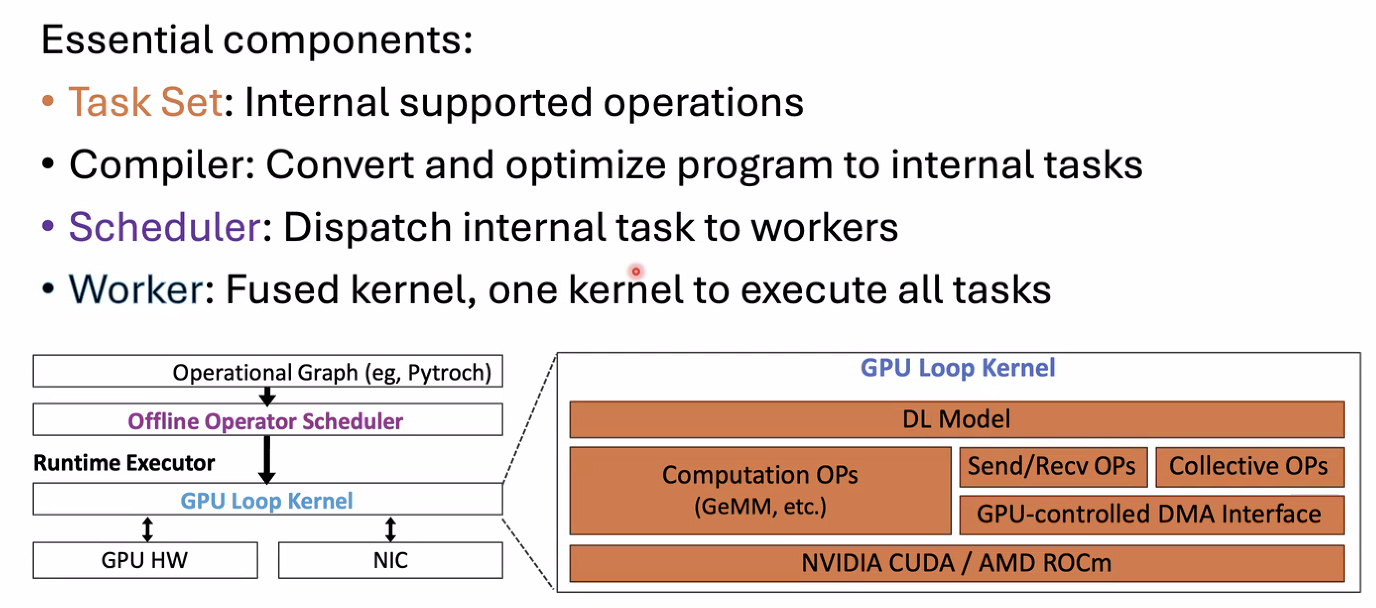
- Megakernel System Framework
- Megakernel Components
- Understanding the Performance Benefits of Megakernels
GPU Heterogeneous Computing
- Terms:
- Host - The CPU and its memory (host memory)
- Device - The GPU and its memory (device memory)
- GPUs need some special programs to utilize code on the parallel compute of GPU

Simple Processing Flow
- Copy input data from CPU memory to GPU memory
- Load GPU program and execute caching data on chip for performance
- Copy results from GPU memory to CPU memory
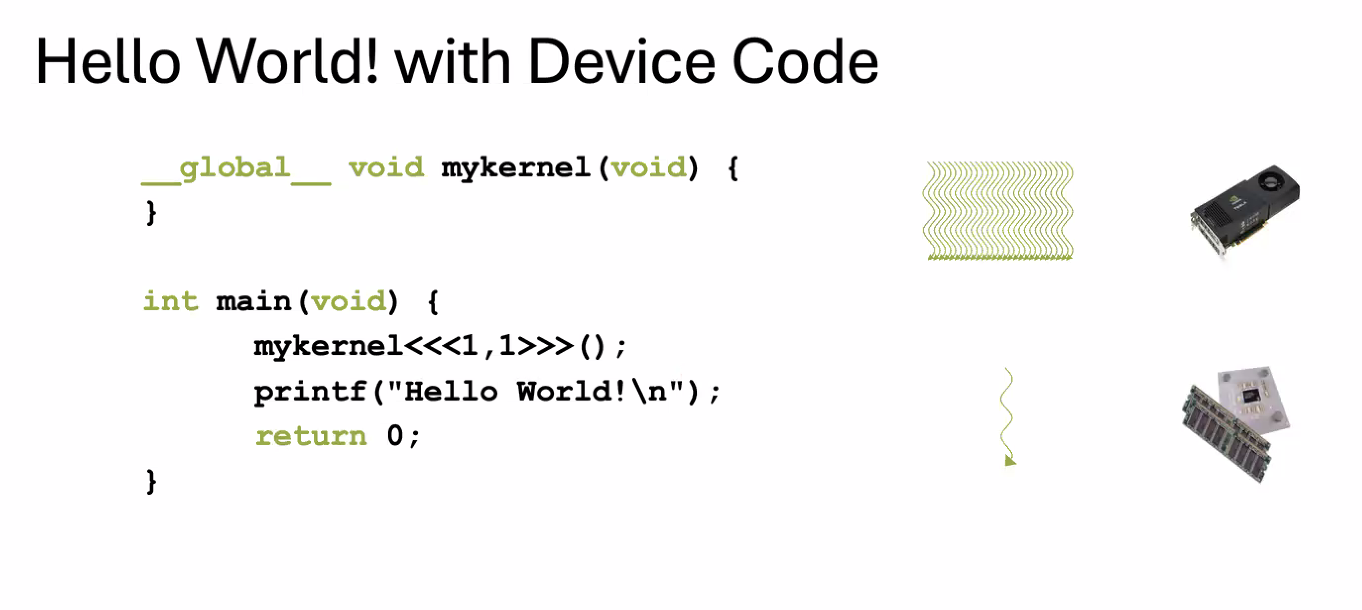 Special code to start the kernel to load code onto GPU
Moving to parallel
GPU computing is about massive parallelism
- so how do we program to make our code run in parallel on the device
- CPU-like code only compute one element at a time
Vector Addition on Device
- With
add()running in parallel we can do vector addition - Terminology: the code of of
add()is executed on massive parallel cores, each core we call it a thread - The programming model is called Single Instruction Multiple Threads (SIMT)
- Each invocation can refer to its block index using
ThreadIdx.x 
- Each invocation can refer to its block index using
- By using
ThreadIdx.xto index into the array, each block handles a different index
Concurrent thread Group (CTA) (todo)
- contains a set of threads that run concurrently
Summary of GPU programming Model
- Programming model
- SIMT - Single Instruction Multiple (Concurrent) Threads
- concurrent - running at the same time, not necessarily parallel
- Single function to instruct
- SIMT - Single Instruction Multiple (Concurrent) Threads
GPU Execution Unit (SM)
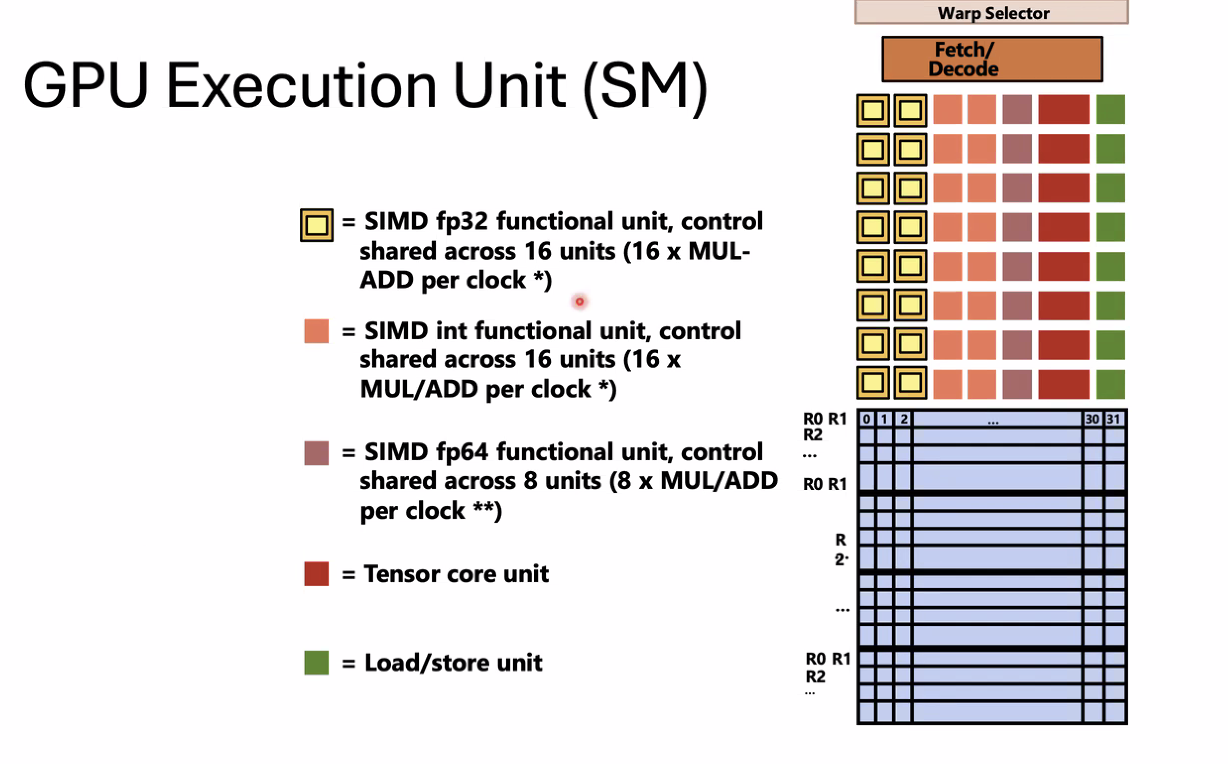
- A group of 32 threads in a thread block is called a warp
- In a CTA, threads 0-31 fall into same warp
- Each sub-core in the V100 is capable of scheduling and interleaving execution of up to 16 warps
- Warp is not part of CUDA programming interface but is an important CUDA implementation detail on modern NVIDIA GPUs
warp as a parallel execution unit
Entire warp of CUDA threads is running this instruction stream
Key Motivation
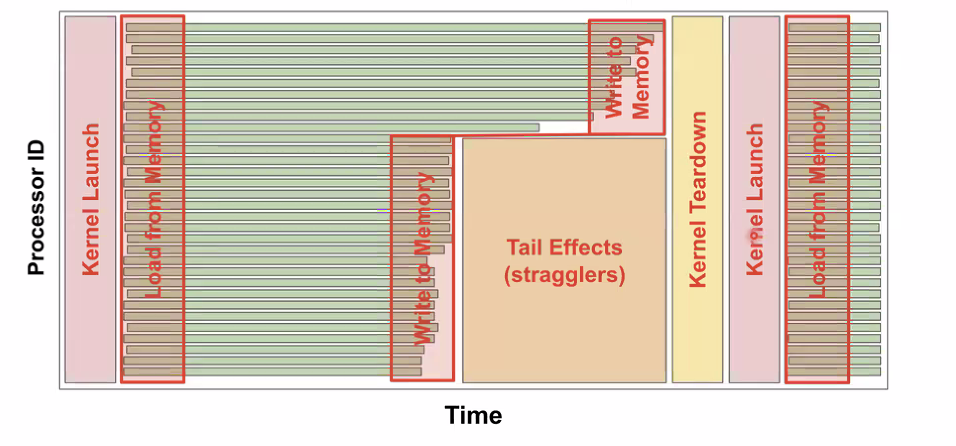
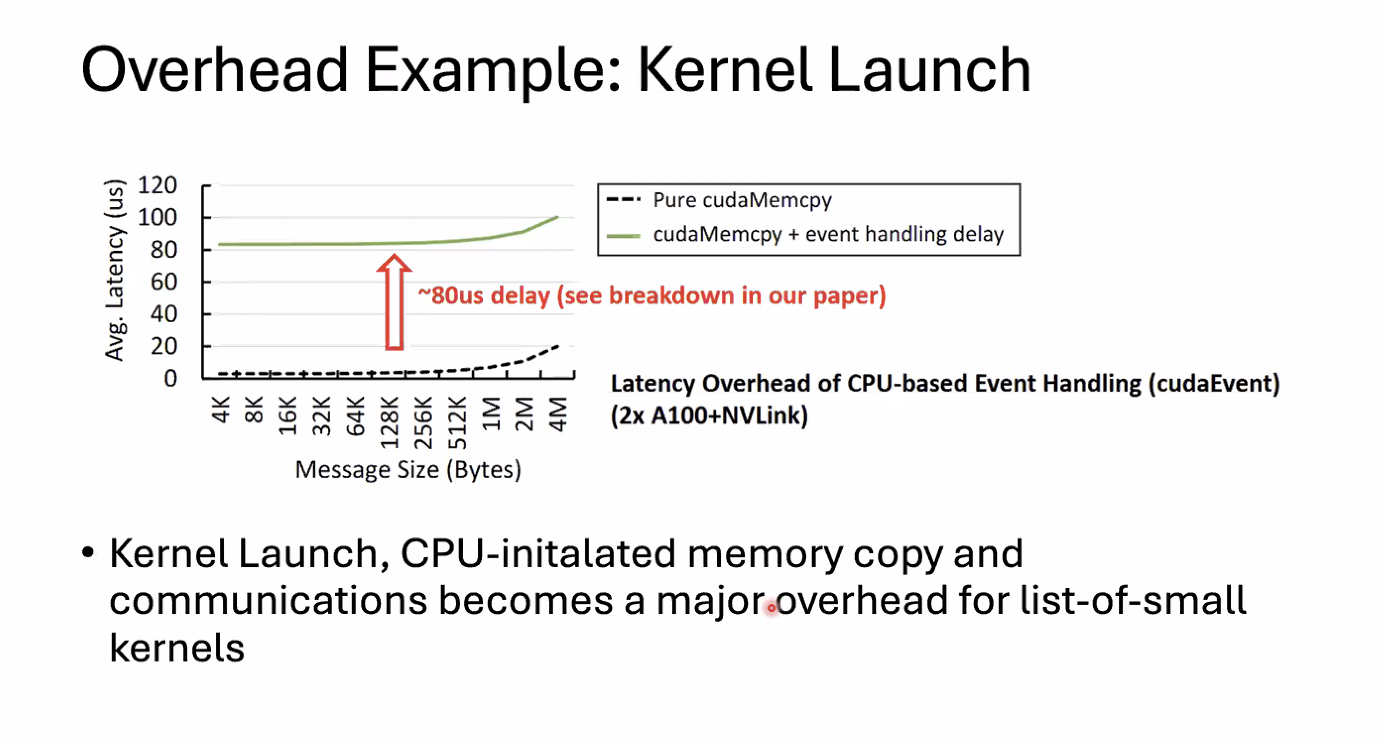
CPU-based control overhead and opaque hardware scheduling from the kernel overhead.
- CPU will launch kernel and wait for results
- causing GPU idle time
MegaKernels
Combining multiple GPU kernel launches and interkernel communication.
Building a Megakernel system