How are LLM interceptions handled now?
- SoTA LLM serving systems tread LLM interceptions as end of requests
- Discard all KV context
- (Re)compute KVs or tokens in context when interception ends
- 37%-40% e2e request latency spend on recomputation
- wastes 40% GPU resources
InferCept
- Pause a request upon intercepting
- Adaptively choose strategies for dealing with KV context
- Efficient implementation of intercept strategies
- Multiple intercepting endpoints supported (tool, other model, human, …)
- 1.6x to 10x improvement over vLLM (SoTA LLM serving system)
Three Intercepting Strategies - when dealing with KV context
- Discard KV context and recompute upon return
- Preserve KV in GPU memory during interception
- Swap KV to CPU memory during interception
Idea minimizing waste
A unified measurement for all strategies
- Waste = unused GPU memory * time
- Accounting for intercepted request and remaining request
For each intercepted request, choose the minimal-waste strategy
MinWaste Discard: Chunk Recomputation
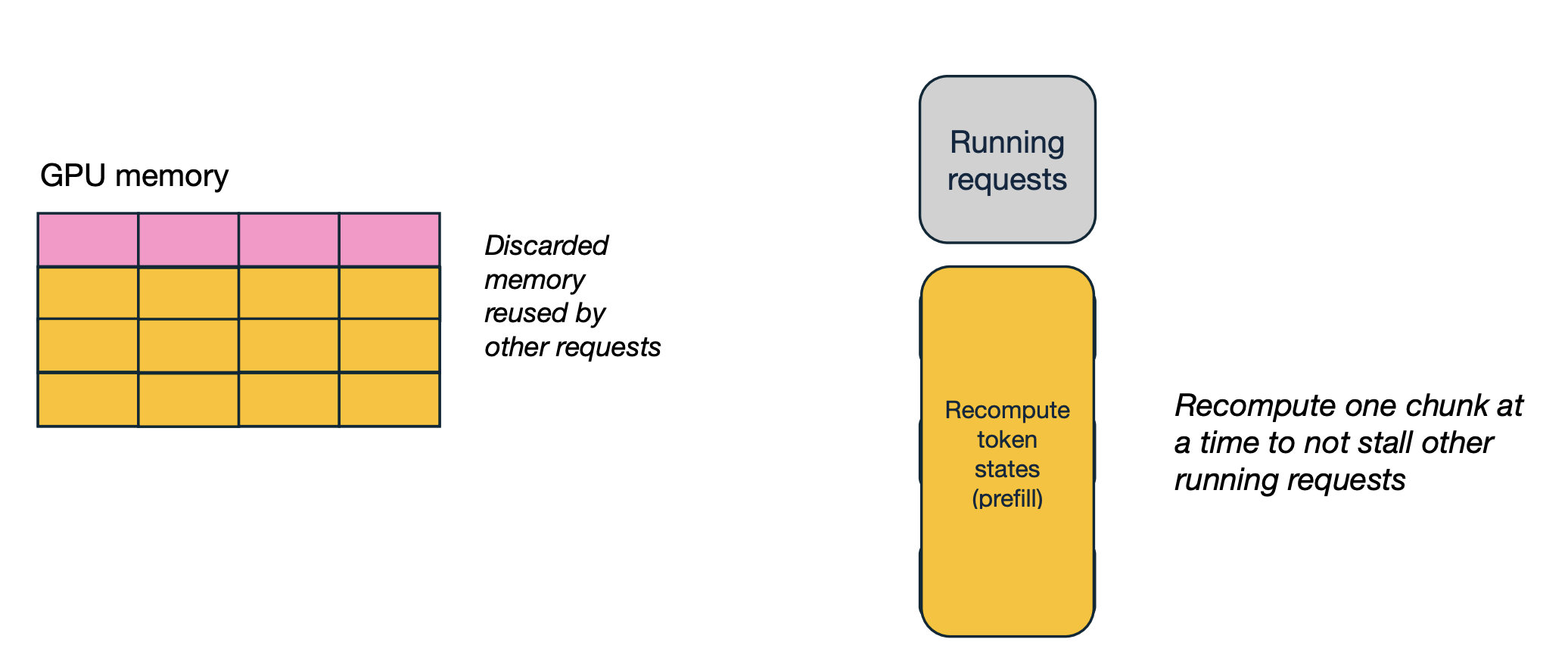 Idea: don’t recompute everything at once
MinWaste Swap: Hide Swap Latency
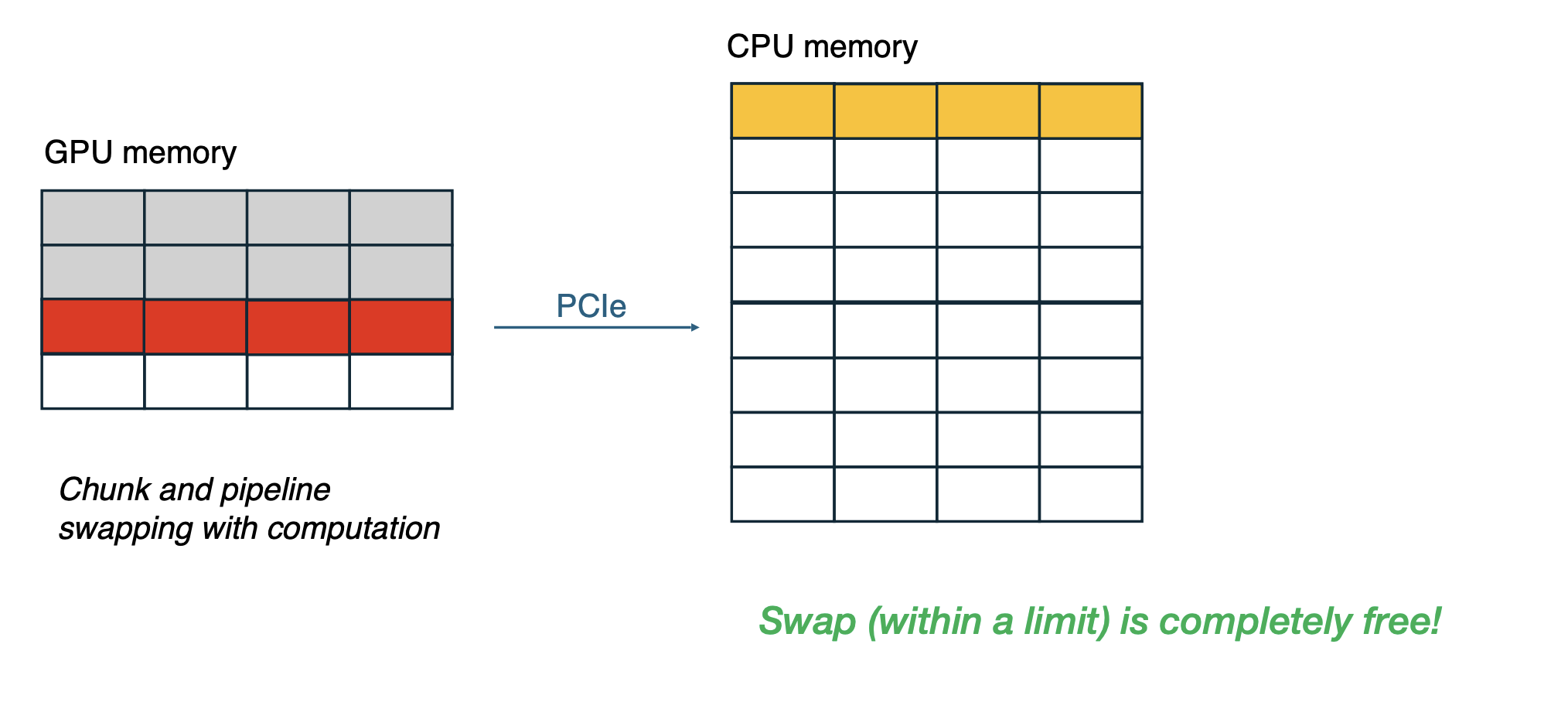 Overlap computation with communication, if computation is within the PCIe bandwidth, it’s essentially free (bottleneck is PCIe)
Efficient Scheduling Across Requests
- Out of all intercepted requests in an iteration
- Utilize the swap budget for otherwise most wasteful requests
- Then, make the decision for remaining requests
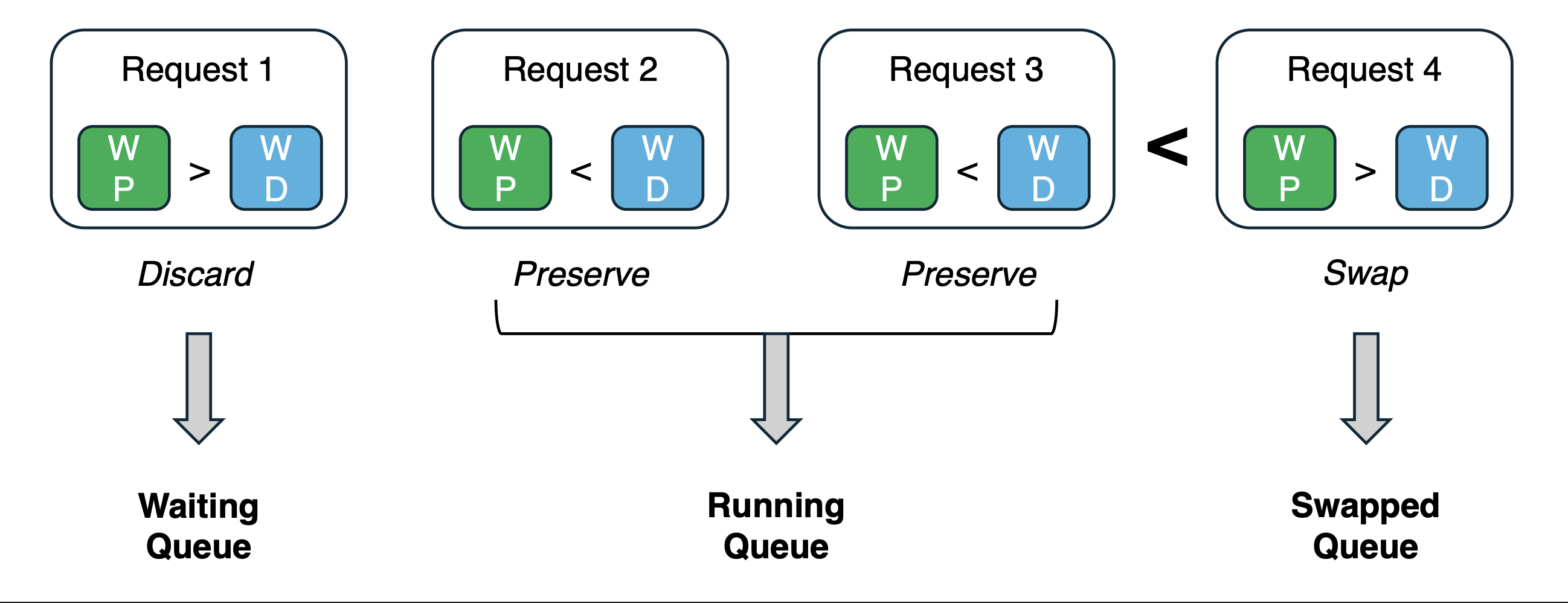
- Maintain 3 queues: running, waiting, swapped
- When scheduling, follow FCFS
- Fill GPU saturation point with running + waiting
- Fill swap budget with swap in + swap out
Scheduling Across Requests
Out of all intercepted requests in an iteration
- Use the swap budget for otherwise most wasteful requests
- Choose the smaller waste of preserve and discard for the remaining requests
InferCept Takeaways
- Model calls are increasing accompanied by external tool and data calling
- KVs need to be properly managed when external entities intercept model calls
- Three basic strategies, each with pros and cons
- InferCept: first work to manage model/non-model interactions at the system level
Problem of Synchronous Function Calling in LLM Inference
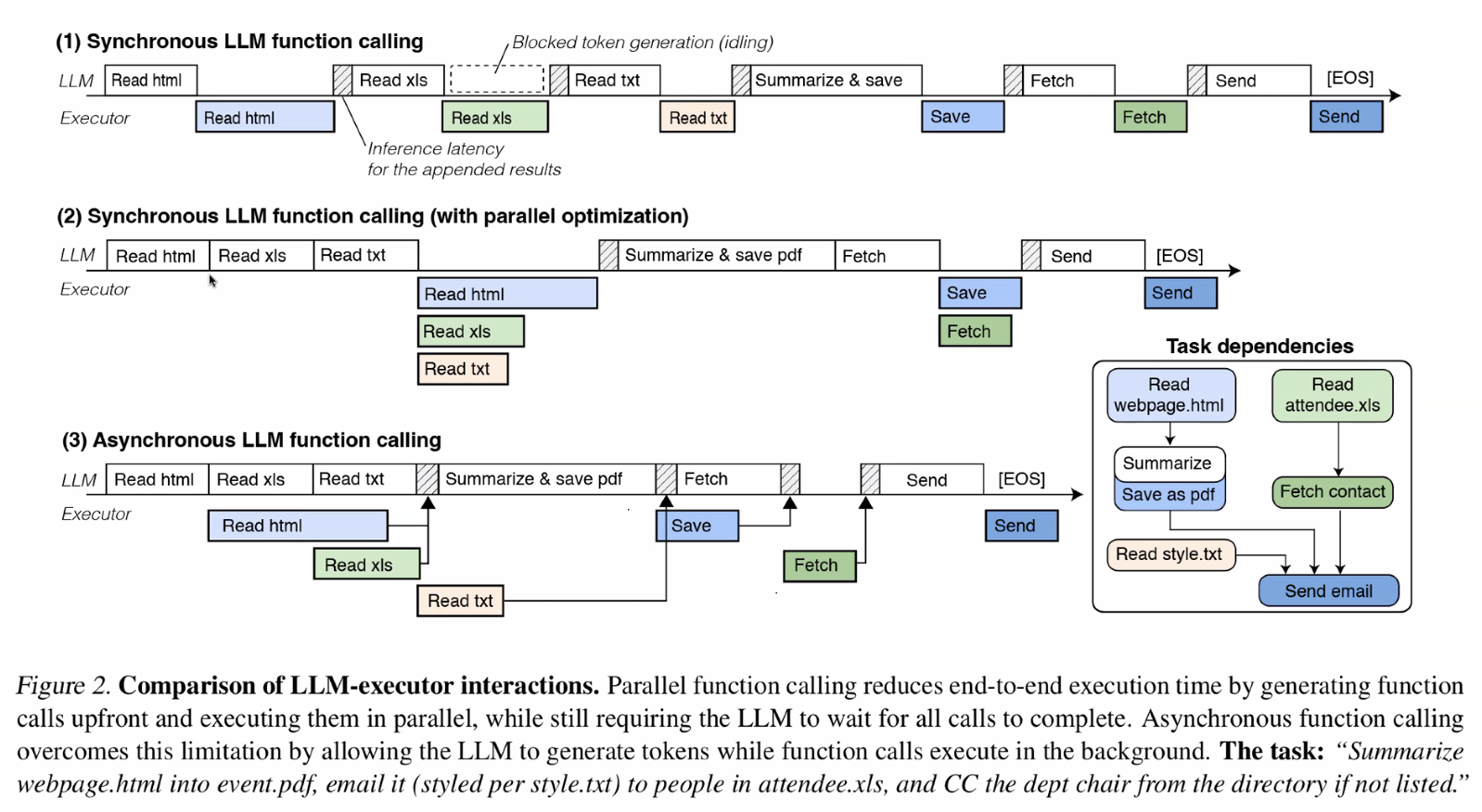
- Synchronous tool calling: the LLM issues a call → token generation stops → waits for call to return → then resumes
- In efficient in latency (not solved by InferCept) and resource-utilization (partially solved by InferCept)
- Some optimizations: bundle calls and execute in parallel, fuse sequential calls, caching, etc
- But synchronous function calling fundamentally blocks overlap between token generation and function execution
Asynchronous Function Calling in LLM Inference
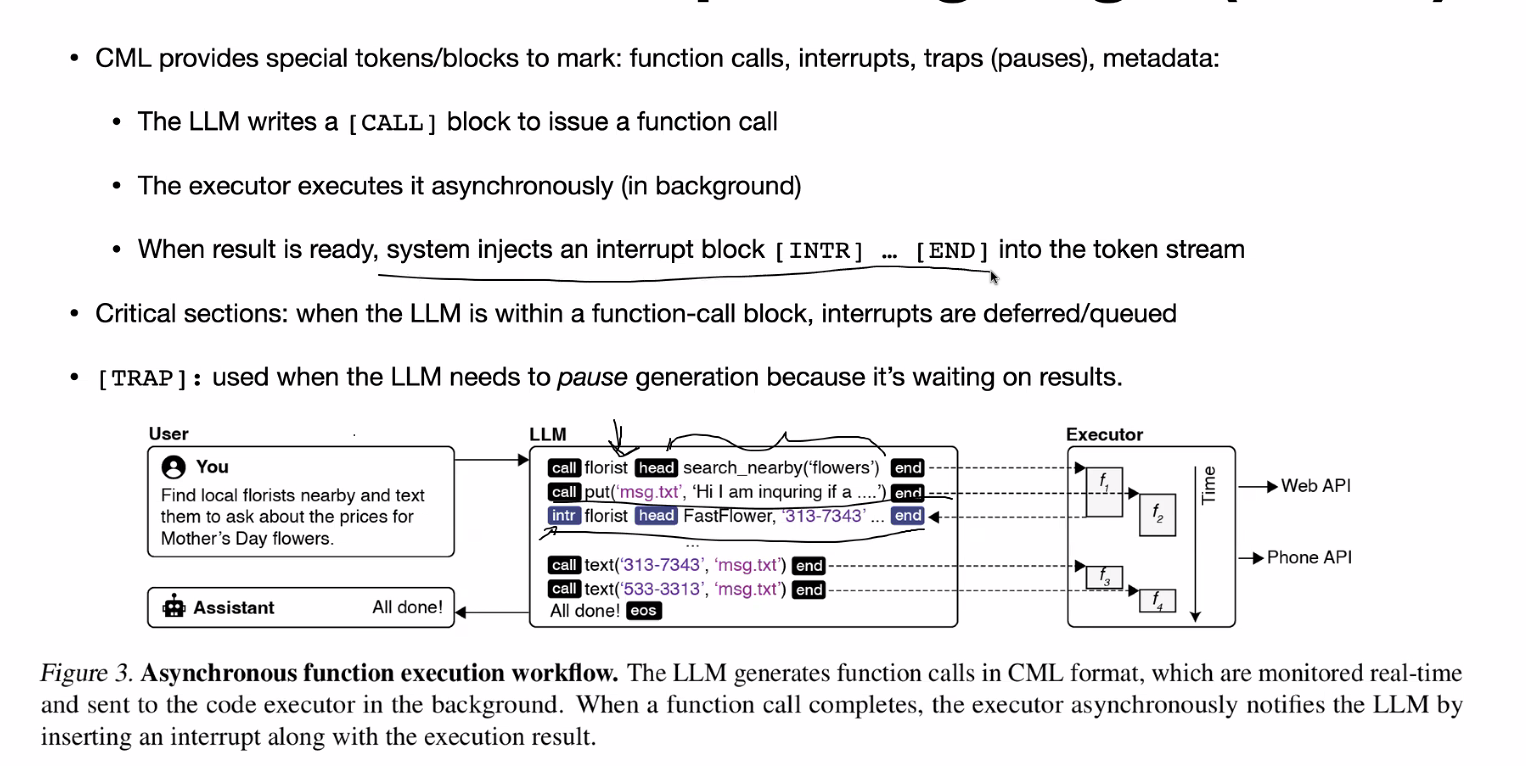
- LLM continues generating tokens (for independent portions of the tasks) while function calls execute
- AsyncLM: allows the LLM and func-call to operate independently
- Note: Typically not that many independent function calls in single LLM
- more prevalent in agents
- Note: Typically not that many independent function calls in single LLM
- How did find LLM independent tasks
- need to fine tune LLM and use special token [CALL] block to issue a function call
- Context Markup Language (CML)
- Benefits:
- overlapping work
- better resource utilization
- less idle waiting
- automatic parallelism even without explicit dependency graph knowledge
Sync vs Async
Context Markup Language (CML)